Customized Legal Strategies From
A Trusted Legal Team
You can count on our attorneys to develop and implement the right legal strategy to achieve your goals.
Serving Indianapolis For More Than 4 Decades
Experienced Personal Injury, Estate Planning, Probate And Insurance Subrogation Attorneys
When choosing a law firm, one of the first things you look at is experience. Why does experience matter? Because it is proof the law firm has done it before and done it successfully. It means the attorneys will know the shortest path from where you are now to where you want to be, legally speaking. It means that, through changing laws and changing times, the law firm has stood strong as a resource, and will still be here for you tomorrow.
At Grant & Grant, our lawyers have been a fixture of our Indianapolis community for decades. We care about our community and give back through a number of organizations. Respected by past clients and peers alike, members of our team have served as leaders in local legal organizations such as the Indianapolis Bar Association. They have taught both the public and fellow lawyers through continuing educational seminars.
Built on the foundation of a strong background in complex litigation, the attorneys at Grant & Grant represent national and regional insurance carriers to pursue their subrogation recoveries, while also advocating for people who have suffered personal injuries due to others’ negligence. This combination allows us to view cases from a unique, strategic perspective that ensures the best possible outcome for your case.
Our Primary Practice Areas




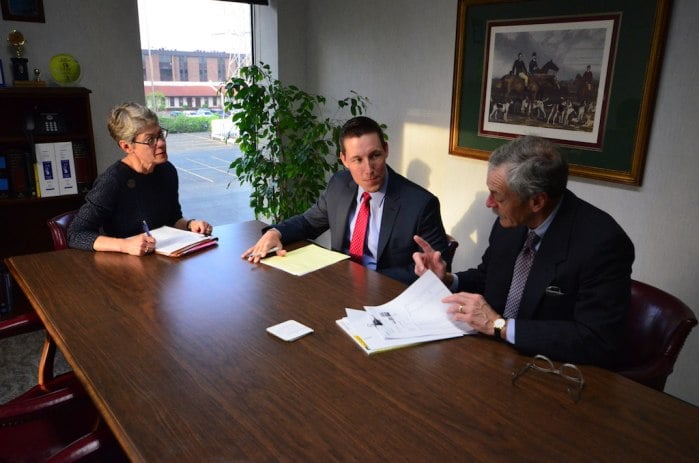
A Culture Of Collaboration
A law firm’s culture matters. If a law firm’s culture is one where lawyers are constantly competing against each other, vying for the top position, where does that leave you, the client?
At Grant & Grant, we take pride in our culture of caring, of friendship and of collaboration. When you choose us to handle your case, you will have one attorney in charge of your file, with the support of all the other attorneys at our law firm. We work together because that is often what it takes to get the best possible result.
Caring And Communicative
We are accessible and open. From day one, you will find us ready to listen and here to help. Just as we customize our legal strategy to meet your needs, we also customize the attorney-client relationship to suit you. We want you to be comfortable knowing that we are here for you when you need us, ready to answer questions or explain any aspect of the law or your legal strategy.
As your case progresses, we will stay connected with you, because you are not just a client, you are part of the team, and your input is critical at every stage of your case.